
Although our name may imply that we’re only here to remove invasive plants like poison ivy, we also care about creating environments where your native and desired plants and trees can thrive. One of the most common, and easiest to fix pitfalls that homeowners make in the Hudson Valley is the dreaded “mulch volcano.”
What is a mulch volcano?
“Mulch volcano” is the term for when too much mulch is piled around a tree’s base. Doing so traps moisture against the trunk, which invites decay, pests, and rot that can hurt or kill your tree. It can also suffocate your tree’s roots and cause structural weakness.
Although piling mulch too high around a tree’s base has been a problem for a long time, the earliest use of the term “mulch volcano” seems to go back to October 1995, where Dr. Dennis Ryan of UMass-Amhert said that they do more harm than good.
What risks are amplified by mulch volcanoes?
In the Hudson Valley, we’re known for warm, humid summers with a good amount of rainfall. That means that mulch volcanoes will stay warm and moist for long periods of time, which are the ideal conditions for trunk decay fungi. In the winter, thick mulch also holds moisture against the bark, which causes freeze-thaw damage.
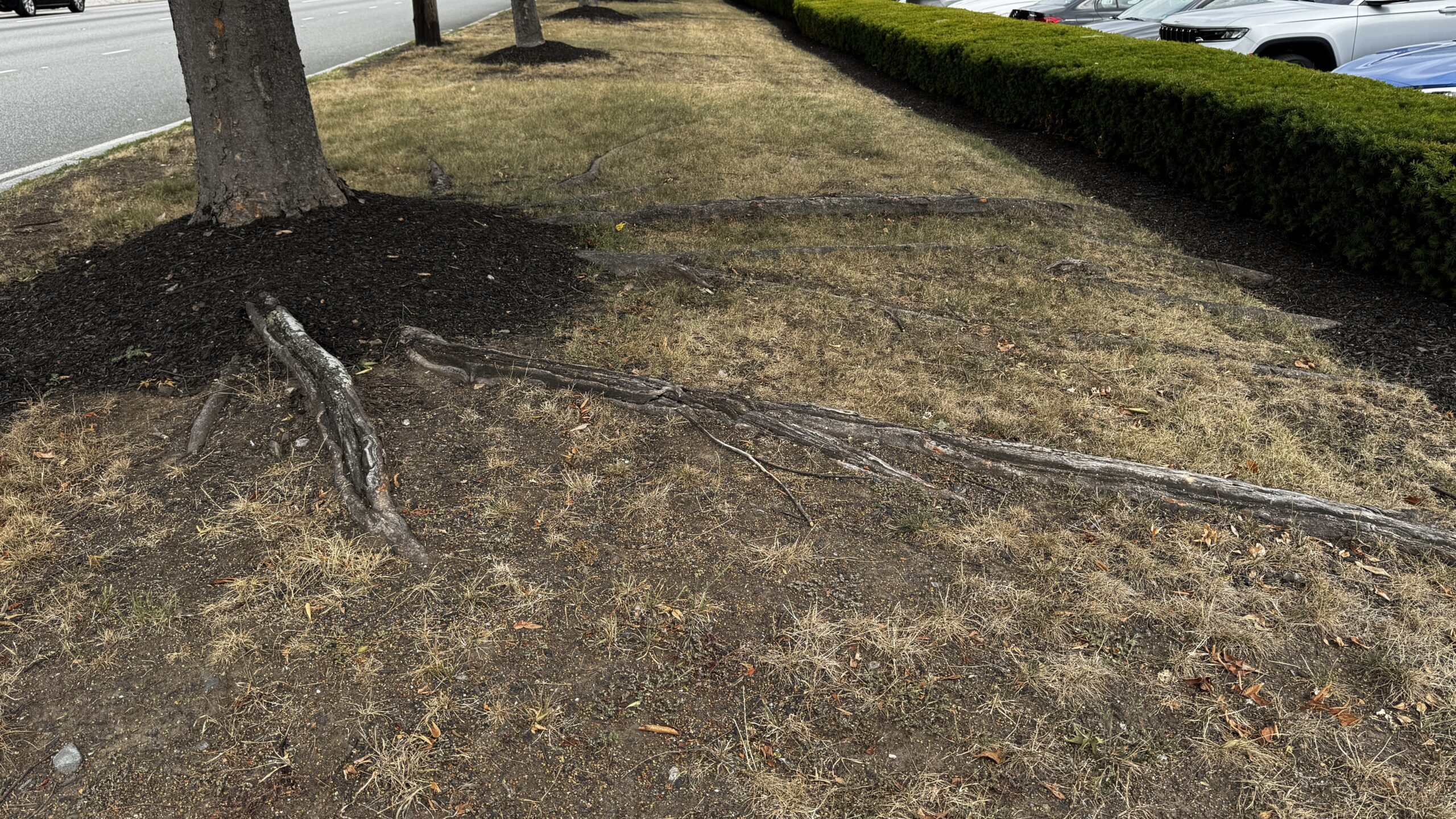
Shallow rooted trees that are desirable in the Hudson Valley, like maples and dogwoods, are especially vulnerable. After being weakened, trees can become vulnerable to invasive plants and species such as Japanese stiltgrass, multiflora rose or borer insects.
What to do instead of a mulch volcano
A mulch volcano is an example of a gardening or landscaping practice that doesn’t emphasize soil health, biodiversity and natural processes. It creates an artificial mound that strangles your tree instead of protecting it.
The nearby city of Saratoga Springs’ Department of Public Works explicitly condemned mulch volcanoes in 2016, saying that “it’s killing the tree” and banned the practice on city property.
A good alternative is to do what’s called a “mulch donut,” which is a 2-4 inch organic mulch layer that you can spread out in a wide ring around your tree, but several inches away from the trunk. Some possible organic mulches that are preferable include wood chips, bark chips, shredded leaves, pine needles or compost.
This method of mulching out, not up, conserves soil moisture, suppresses weeds and feeds the soil so that your tree can stay healthy.
